Motive Waves
Key Takeaway: Motive waves subdivide into five waves and always move in the same direction as the trend of one larger degree. They are straightforward and relatively easy to recognize and interpret.
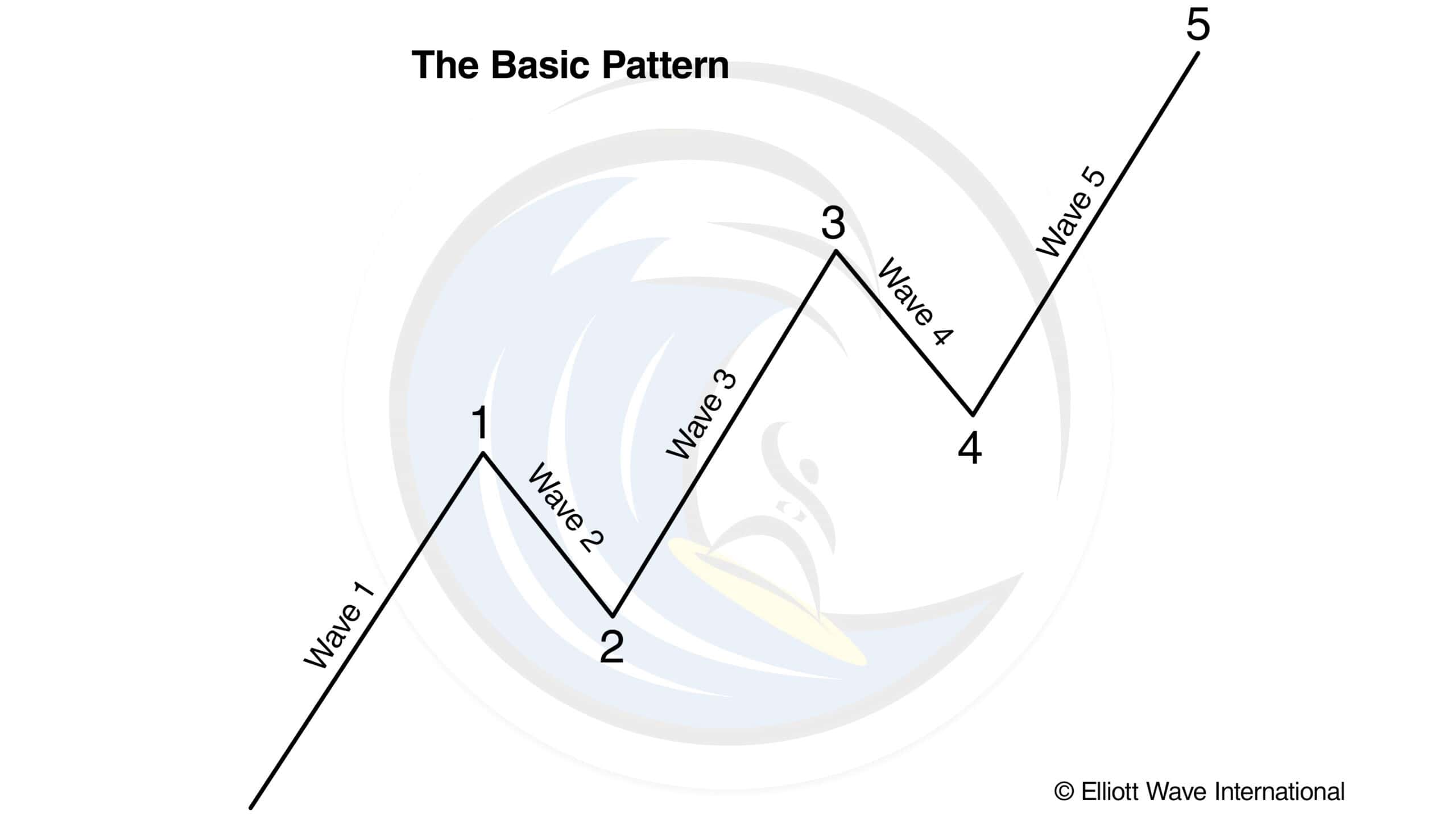
There are two modes of wave development: motive and corrective. Motive waves have a five-wave structure, while corrective waves have a three-wave structure or a variation thereof. Motive mode is employed by both the five-wave pattern of Figure 1 and its same-directional components, i.e., waves 1, 3 and 5. Their structures are called “motive” because they powerfully impel the market.
Within motive waves, wave 2 always retraces less than 100% of wave 1, and wave 4 always retraces less than 100% of wave 3. Wave 3, moreover, always travels beyond the end of wave 1. The goal of a motive wave is to make progress, and these rules of formation assure that it will.
Elliott further discovered that in price terms, wave 3 is often the longest and never the shortest among the three actionary waves (1, 3 and 5) of a motive wave. As long as wave 3 undergoes a greater percentage movement than either wave 1 or 5, this rule is satisfied. It almost always holds on an arithmetic basis as well.
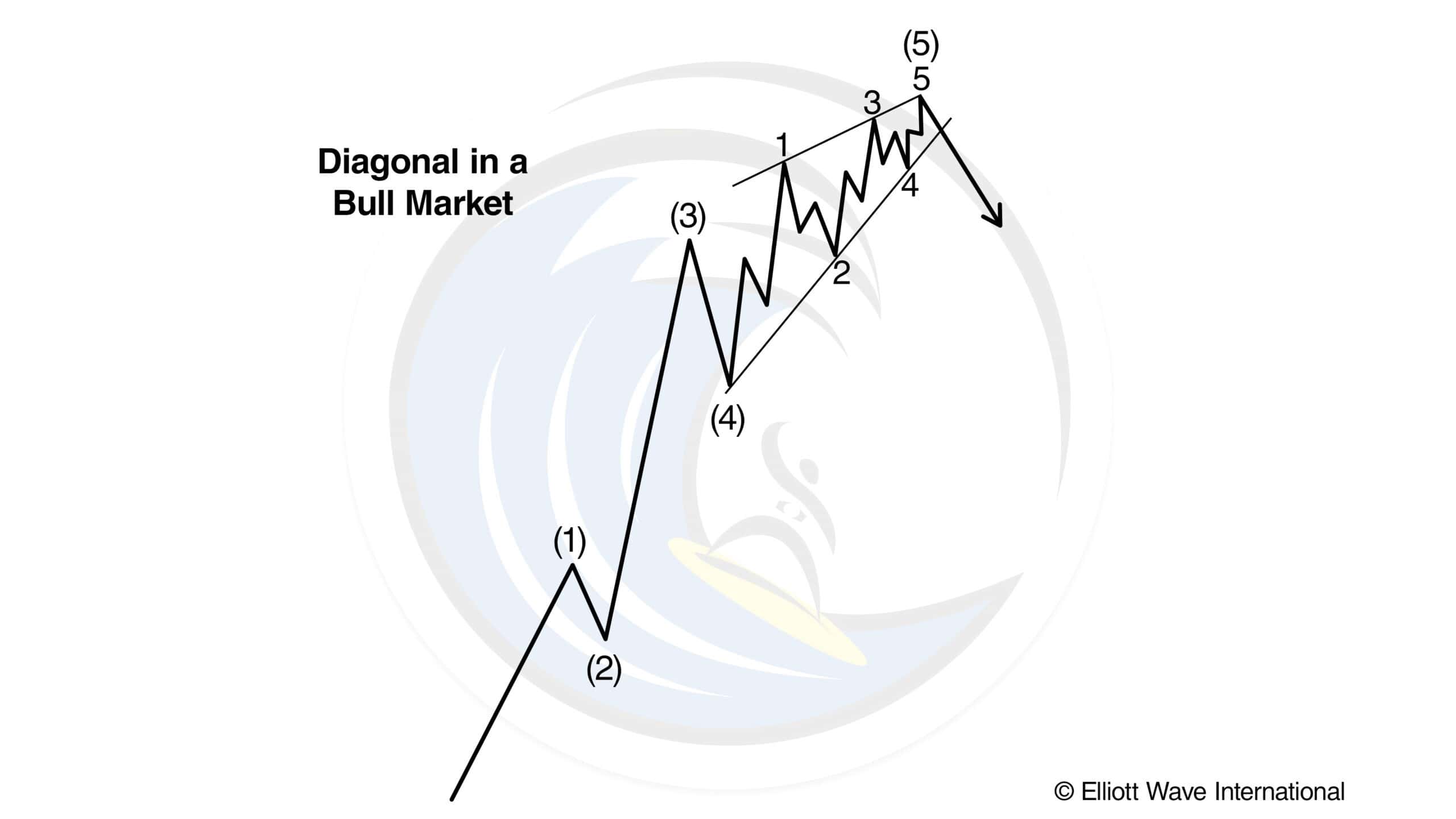
There are two types of motive waves: impulse (see Figure 1) and diagonal (see Figure 2).
“So wait… I can really learn to predict the markets?”
Yes. Markets aren’t rational. For every action, there isn’t always an equal and opposite reaction.
What drives prices isn’t logic, but emotion. Market emotions unfold in predictable patterns called Elliott waves. That’s what makes prices predictable.
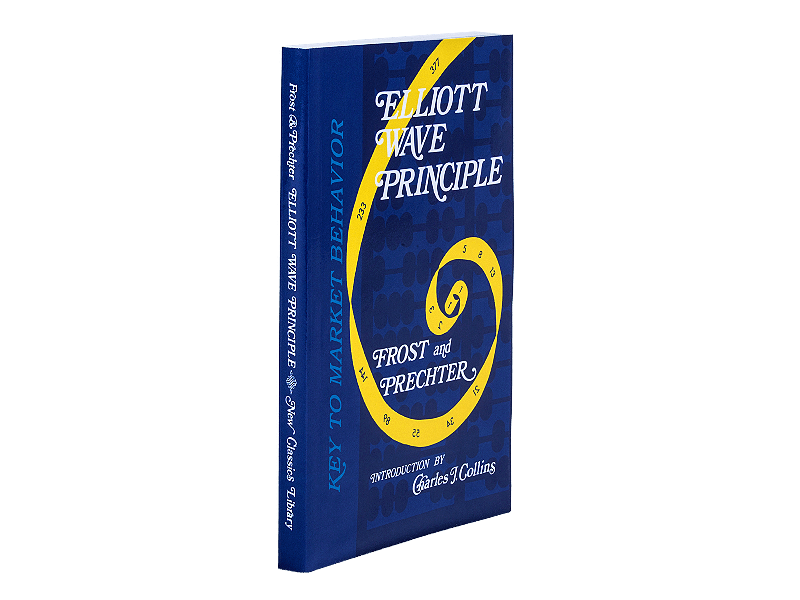
What you just read is from the Wall Street bestseller, “Elliott Wave Principle: Key to Market Behavior.” For 40+ years, it’s been a top-shelf book on unbiased market analysis.
Amazon reviewers call it “classic and essential” and “the bible of the theory.” Now, you can get instant, FREE access to the full online version of this book ($29 value).