As social mood soars, MLB salaries fly out of the park
On December 8, baseball superstar Juan Soto power-hit his way into being the highest-paid athlete ever. The Wall Street Journal reports:
Sports Has a New Salary King: Juan Soto signs $765 million deal with the Mets…The 26-year-old slugger jilted the Yankees and agreed to a 15-year contract with their crosstown rival that shatters every conceivable economic record in the game.
Soto is riding a wave of baseball popularity, in which 2024 saw Major League Baseball attendance increase for the second consecutive year, the first time the sport enjoyed that since 2011.
Socionomics has been a loyal fan since the late 1980s, when Robert Prechter first identified baseball as a bull market pastime. Bob pitched a historic correlation between positive social mood and the public’s affinity for baseball in his November 1991 Elliott Wave Theorist:
Sports can provide a background for extreme emotions socially expressed. In the early 1980s, at the end of the 16-year bear market pattern and the low for stocks in constant dollars, baseball bottomed in its slump at a low point that saw players on strike. Since then, baseball has been on a powerful ‘comeback’ trend which has continued right through to this year. In fact, baseball players’ salaries constitute one of the few speculative markets that have hit new all-time highs.
The April 2014 Theorist added baseball salaries to the list of measures that reflect rising social mood:
In one of many lucrative deals, Detroit Tiger third baseman Miguel Cabrera signed an eight-year contract that will make him “the highest-paid athlete in professional sports history.” Non-stars are doing well, too. At almost $4 million, the average ballplayer salary will hit an all-time record (as shown on the chart), as will ticket prices and revenues.
… It makes sense that as stock prices ratchet to new nominal highs, the national pastime would do so as well.
[Chart updated to reflect data to 2024]
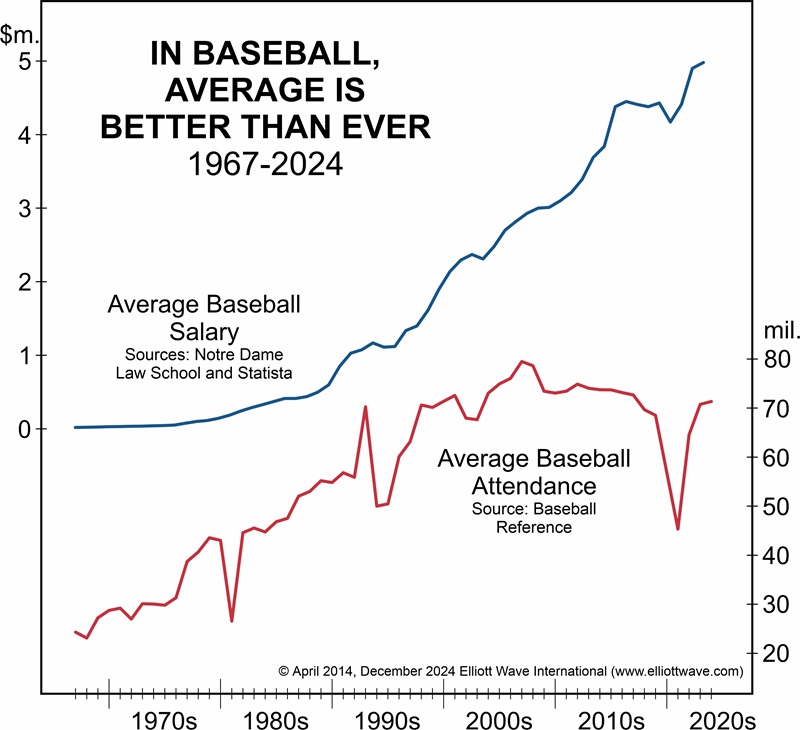
For reference, the average MLB salary versus the average American salary has gone from striking distance to out-of-the-Earthly-park since 1975:
1975: The average salary was $45,000, which was three times the average American salary at the time.
2010: The average salary was $2,400,000, which was 50 times the average American salary.
2018: The average salary was $4,100,000, which was 80 times the average American salary.
2023: The average salary was $4,907,108, an 11.1% increase from the previous year.
As nominal stock prices hit home run after home run, the mood is right for Soto’s record-breaking contract and soaring baseball attendance.
Right now, the December 2024 Socionomist has even more bases well covered, with a timely cover story on another expression of extreme positive mood: the rise of the Sigma male. Not to mention a deeply important discussion on how the increased political tensions between Russia and Ukraine may threaten to incite World War 3.
Subscribe today to read the December Socionomist.